


The Real Estate Market in 2026: Trends, Forecasts, and Opportunities in Romania

Romania’s real estate market is entering a phase of maturation and recalibration in 2026, following several years marked by economic volatility, successive adjustments to financing costs, and structural shifts in tenant and investor behavior.
From the perspective of Cushman & Wakefield Echinox, 2026 is a year for well-founded decisions, projects adapted to new economic realities, and capital directed toward assets with solid fundamentals, prime locations, and medium- to long-term performance potential. The market is becoming more selective yet also more predictable, creating clear opportunities for players who correctly understand the landscape.
How the Romanian real estate market has evolved in recent years
Recent years have marked a period of profound transformation for the local real estate market. Following a cycle of rapid growth—subsequently impacted by the pandemic and a strained macroeconomic environment at both regional and global levels—the market has undergone a process of correction and repositioning. During this period, several clear trends have emerged: a more cautious investment approach focusing on stable assets and established regional markets; a sharper distinction between prime and secondary projects regarding both rent levels and investor interest; and developers adapting to actual demand through a more balanced delivery pace and increased attention to costs and sustainability.
Factors influencing the real estate market in 2026
In 2026, real estate market dynamics in Romania are shaped by a mix of macroeconomic factors and segment-specific influences.
Interest rates and financing costs remain key elements in investment and development decisions. Although extreme volatility has subsided, financing costs continue to necessitate a cautious approach, favoring well-capitalized projects and investors with medium- to long-term horizons.

Inflation—while more controlled than in previous years—continues to impact construction costs, rent levels, and indexation strategies, driving a greater focus on contract structures and asset operational efficiency.
Demand is becoming more selective and better informed. Tenants and buyers prioritize space quality, energy efficiency, flexibility, and location; projects that meet these requirements hold a clear competitive advantage.
Supply, in turn, is more disciplined. Speculative developments are approached with caution, and new projects are more carefully calibrated to market realities to avoid imbalances between demand and delivery.
Why 2026 is a pivotal year for investors, developers, and companies
For investors, this year offers a favorable opportunity to identify well-positioned assets, amidst a more balanced competitive landscape where prices better reflect economic fundamentals.
For developers, the year brings the chance to deliver projects aligned with new market demands—sustainable, efficient, and adaptable. Differentiation will increasingly be driven by quality, concept, and the ability to meet actual demand.
For companies and tenants, 2026 offers a more predictable environment for relocation, expansion, or consolidation decisions, in a market where space flexibility and efficiency are becoming essential criteria.
Demand shifts toward quality (flight to quality)
One of the most visible trends in 2026 is the intensifying “flight to quality” phenomenon, evident across all major real estate market segments. Tenants and investors are becoming increasingly selective, favoring projects that are well-located, operationally efficient, and adapted to current usage requirements.
In a climate where total occupancy costs are closely scrutinized, quality is no longer viewed as a “premium” feature but as a prerequisite for performance and stability. Properties offering energy efficiency, flexibility, accessibility, and high construction standards attract the bulk of demand, whereas secondary assets require additional investment to remain competitive.
Mixed-use projects and urban regeneration</h3
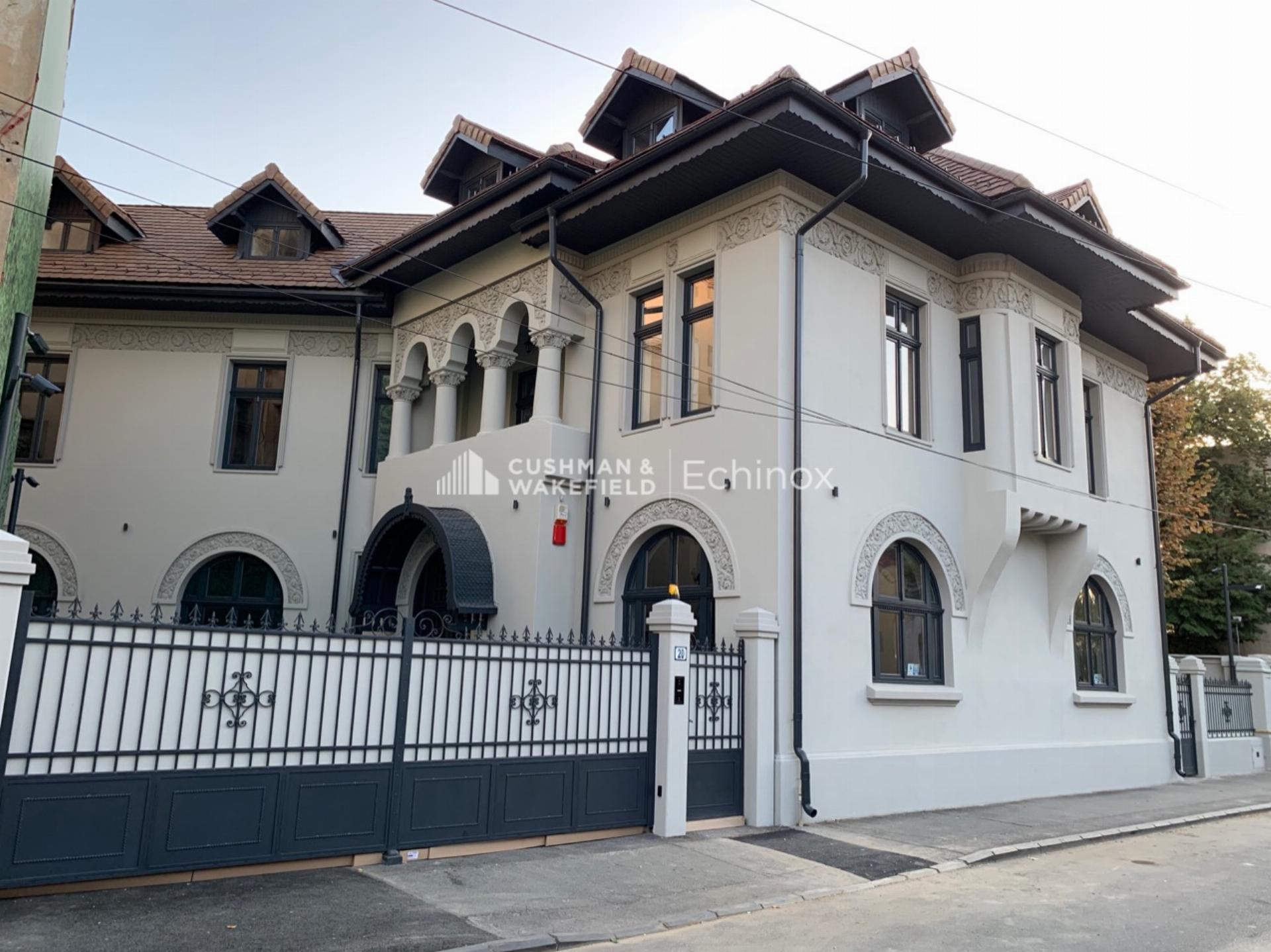
The Safest Neighborhoods in Bucharest: A Guide for Buyers and Renters
In a dynamic real estate market, the criteria for selecting a home have changed significantly. If proximity to the city center or access to amenities used to be the priority, safet [...]

The 15-Minute City: Urban Planning Concept and Impact on Real Estate Development
Traffic has become one of the major vulnerabilities of large cities, affecting the daily rhythm and quality of life of their residents. Outdated infrastructure—such as that in Bu [...]

Romanian Investment Marketbeat H1 2026
The first half of 2026 recorded a total investment activity of €211.1 million, marking a 46% decrease compared with H1 2025. This volume was largely solely by the office (€138. [...]
CONTACT
We would love to hear from you! Send us a message and we’ll get right back in touch.